
The role of green technologies in achieving the Sustainable Development Goals
21:19 22.09.2025 2994
When it comes to environmental well-being, the conception of the Sustainable Development Goals is one of the first to come to mind. The Sustainable Development Goals are closely linked to industrial development. In recent decades, the growth of production worldwide has negatively impacted environmental well-being, air and water quality, biodiversity and human health. To reduce these negative impacts and to prevent their consequences, it is necessary to introduce green technologies in various sectors of the economy and everyday life. Green technologies include methods that help reduce the negative impact of production on the environment and promote the efficient use of natural resources and environmentally friendly economic development. Innovative technologies are currently being actively introduced in various sectors of the national economy: energy, construction, agriculture, transportation and others.
The faster is industrial development, the greater is its energy demand. Therefore, green technologies are increasingly being used to generate clean, low-carbon energy primarily from renewable sources. Renewable energy sources include natural resources such as the sun, wind, rivers, seas and underground thermal waters. Technologies such as solar panels, wind turbines and hydroelectric power plants are used to generate energy from these resources. Despite the high costs of producing and implementing these technologies, the accelerating pace of scientific and technological progress and the development of international cooperation in this field help reduce the costs of applying green technologies.
Renewable energy sources contribute to a significant reduction in greenhouse gas emissions. They also reduce dependence on fossil fuels such as oil and coal, whose reserves are limited on Earth. The creation of new jobs is also one of the positive effects of introducing green technologies.
Turkmenistan places great importance on the introduction of green technologies in both the agricultural and social sectors and on the implementation of effective measures to limit methane emissions. Large-scale projects are being successfully implemented in this area. Striking examples of an environmentally friendly energy transition include the construction of a multifunctional solar-wind power plant in the Gyzylarvat etrap of the Balkan velayat, the use of electric public transport in the city of Arkadag and the introduction of modern gas turbine power units at thermal power plants across the country.
Water conservation systems are also widely used in our country’s agriculture. Green technologies are being effectively applied in the construction industry; building and structure designs are being developed with energy efficiency in mind, and environmentally friendly materials are used in their construction.
The city of Arkadag, built in accordance with the conceptions of a smart and green city, is our country’s largest project, vividly demonstrating our commitment to respecting nature and preserving environmental well-being. This is evidenced by the city’s receipt of several international environmental certifications. Currently, in collaboration with international organizations and financial institutions, the new city is implementing innovative renewable energy generation technologies using solar panels and grant support for projects aimed at recycling water resources.
The signing of a Memorandum of Understanding on May 17 of the current year between the State Committee for Construction of the City of Arkadag under the President of Turkmenistan and the Asian Development Bank, with the participation of our Hero- Arkadag, is also an important step in this direction.
As a result of concern for environmental well-being and the transition to a green economy, which has become a priority of state policy, the country is seeing significant progress. This is clearly demonstrated by the fact that in his speech at the international forum “Central Asia Facing Global Climate Challenges: Consolidation for Shared Prosperity” held in Samarkand, Uzbekistan on April 4 of the current year, our esteemed President noted that a Commission on Methane Emissions Reduction would be established in Turkmenistan in 2023. In December of that year, Turkmenistan’s accession to the Global Methane Commitment was officially announced. As a result, by the end of 2024 alone, methane emissions in Turkmenistan were reduced by 11 percent, exceeding the planned level.
Despite the constant improvement of technologies facilitating the use of renewable energy sources, international experts confirm that it is impossible to abandon fossil fuels, particularly hydrocarbons, for decades to come. Hydrocarbons currently play a vital role in global economic development and meeting people’s daily needs. Therefore, in recent years, the oil and gas industry has undertaken significant work to prevent harmful environmental impacts. Specific examples in this area demonstrate the significant importance placed on green technologies in the fuel and energy sector worldwide. Investment in this area is steadily increasing. Previously, the majority of methane emissions in this sector were associated with the flaring of associated petroleum gas in production wells.
Currently, the technology of liquefying associated petroleum gas and producing synthetic fuel is used in many countries, including ours. This method allows efficiently using valuable raw materials and significantly reducing environmental harm.
Along with other sectors of the economy, the oil and gas industry is also actively using augmented reality (AR) and virtual reality (VR) technologies. These technologies make it possible to create a virtual copy of any equipment and a digital version of any situation that may arise in production. Analyzing real equipment and potential situations using digital models is essential for improving production efficiency, training specialists and enhancing their professional skills.
Artificial intelligence technologies are also considered a promising area in the oil and gas industry. Experts note that these technologies hold great promise, contributing to cost and time savings during the discovery and development of oil and gas fields, ensuring their normal operation.
Artificial intelligence technologies are showing high results in areas such as real-time data analysis, production process efficiency regulation and the identification of mechanisms requiring repair. It is estimated that the industrial automation and AI market will be nearly three times larger in the next five years than it is today. Shell uses AI-based tools for horizontal well drilling, while ExxonMobil uses them to detect leaks in subsea oil and gas pipelines. A joint project between the Azerbaijani oil and gas company SOCAR and the American technology corporation IBM uses artificial intelligence to design wells, to determine project costs and deadlines, to measure key performance indicators and to identify risks.
The introduction of green technologies in economic sectors, particularly in the oil and gas industry, is essential to ensuring environmental well-being and achieving the Sustainable Development Goals. Thanks to the efforts of the esteemed President, the implementation of large-scale work in this area in our country and the strengthening of international cooperation are a worthy contribution to improving the lives of current and future generations.
Annajemal AMANGYLYJOVA,
a teacher at the Institute of Telecommunications and Informatics of Turkmenistan
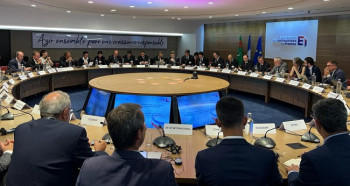
The delegation of Turkmenistan discussed promising areas of cooperation with French companies
The official delegation of Turkmenistan headed by the Vice-Chairman of the Cabinet of Ministers of Turkmenistan, Minister of Foreign Affairs Rashid Meredov is on a visit to France on September 4-5, during which issues of enhancing the Turkmen-French partnership are discussed. This was reported by the Ministry of Foreign Affairs of Turkmenistan.
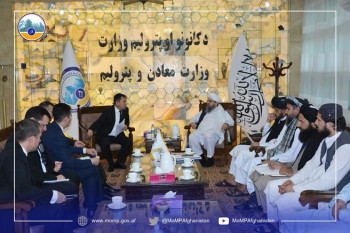
Representatives of Turkmenistan and Afghanistan discussed the implementation of the TAPI project in Kabul
General Director of TAPI Pipeline Company Ltd Muhammetmyrat Amanov met with Acting Minister of Mines and Oil of Afghanistan Shahabuddin Delaware, with whom he discussed the progress of the Turkmenistan-Afghanistan-Pakistan-India gas pipeline project, TOLO news reports.

Business meetings of the delegation of Turkmenistan with business circles of France were held in Paris
As part of the official visit of the delegation of Turkmenistan to France on September 4-5, dozens of business meetings with representatives of French companies were held in Paris, the Ministry of Foreign Affairs of Turkmenistan reports.

The national pavilion of Turkmenistan at EXPO 2023 in Qatar will be built by the “Söwda öýi” enterprise
The President of Turkmenistan signed a Resolution, allowing the Chamber of Commerce and Industry to enter into a contract with the “Söwda öýi” enterprise for the design and construction of the National Pavilion of Turkmenistan for participation in the international exhibition EXPO-2023, which will be held in Doha (Qatar) from October 2, 2023 to March 28, 2024 under the motto “Green nature for the benefit of the environment”.
Companies from the UAE and Afghanistan purchased fuel and energy products at the auction
Last week, 89 transactions were registered at the auctions of the State Commodity and Raw Materials Exchange of Turkmenistan.