Mohammed Barkindo: free production capacity is the lowest in history, political decisions are needed
14:56 06.07.2022 6379
*** From the last speech of the OPEC Secretary General at a conference in Nigeria
Free production capacity of OPEC countries is the lowest in its 62-year history due to underinvestment in the industry amid calls to phase out fossil fuels, political solutions are needed to solve the problems of lack of oil in the market. This was said by OPEC Secretary General Mohammed Barkindo during the opening of the conference in Nigeria on Tuesday, July 5, Interfax reported.
As it turned out, this was the last public performance of Mohammed Barkindo, who died last night.
Speaking at the conference, the OPEC Secretary General noted that the oil industry is facing huge challenges on several fronts that threaten its investment potential now and in the long term. "Roughly speaking, the oil and gas industry is under blockade!" Barkindo said at the opening of the conference in Nigeria.
“Firstly, the changing geopolitical events in Eastern Europe, the ongoing fighting in Ukraine, the ongoing COVID-19 pandemic and inflationary pressures around the world have combined into a perfect storm that is causing significant volatility and uncertainty in commodity markets and, more importantly, in the energy world," he said.
"Against this background, a number of industrialized countries and multilateral organizations continue to pursue tough policies aimed at accelerating the energy transition and fundamentally changing the structure of energy consumption," Barkindo said. He noted that the oil industry has not yet recovered from the "huge investment losses of recent years" due to the market downturn in 2015-2016 and the COVID-19 pandemic.
According to him, in 2020, capital expenditures for oil exploration and production fell by about 30%, and in 2015-2016 they fell by 26%.
OPEC estimates that the global oil sector will need a combined investment of $11.8 trillion in exploration, transportation and refining through 2045 to meet expectations of a significant 28% increase in energy demand through 2045. Oil is expected to retain the largest share in the energy mix at just over 28% in 2045, followed by gas at around 24%.
“Years of underinvestment in the oil sector help explain current market pressures and extremely low spare capacity. In OPEC’s 62-year history, spare capacity has never been as low as it is today, and that’s after periods of war, natural disasters and other market shocks. If this trend will continue, it may haunt us in the future," the OPEC Secretary General said.
In his opinion, it would be possible to increase the capacity at the expense of Iran and Venezuela, allowing them to return to the market - now the countries are under US oil sanctions.
Barkindo expressed regret that "global energy cooperation is becoming increasingly fragmented." "New regional alliances threaten to undo decades of progress towards a more stable and interconnected energy system. We cannot allow multilateral energy cooperation and global energy security to become geopolitical collateral damage," he said.
"Unfortunately, the political narrative leading up to and during last year's COP26 in Glasgow was heavily skewed around hydrocarbons and out of touch with the reality of global energy needs. Developing countries were urged to turn their backs on their hydrocarbon assets despite sovereignty over the use of these natural resources is enshrined in the principle of fairness of the Paris Agreement in the context of sustainable development," Barkindo said.
“Attempts to unwisely encourage divestment from the hydrocarbon industry are unfortunately becoming more visible. Last month, UN Secretary General António Guterres, in a speech at a White House sponsored event, suggested that our industry is ignoring its responsibility to address climate change and is undermining global climate policy. Such misleading statements are terribly unfair to many of us in this industry who have dedicated ourselves to working towards inclusive, fair and sustainable solutions to the climate problem," the OPEC Secretary General lamented.
Barkindo expressed his hope that the statements made at the last G7 summit in Germany "about the need for continued investment in fossil fuels to meet the world's energy needs will translate into political action (..) and support an investment climate that makes this possible".
“Both the market and consumers deserve a clear and consistent policy that recognizes that oil is essential for global economic development and the global energy balance. It is imperative that we seize the opportunity to encourage world leaders to return to the roots and principles of the Paris Agreement. This means focusing attention to inclusive, party-driven negotiations and decision-making based on science and data, not emotions and rhetoric," the OPEC Secretary General emphasized.
Various types of fuel and polyethylene sold at exchange auctions
Last week, 36 transactions were registered at the auctions of the State Commodity and Raw Materials Exchange of Turkmenistan.
SC «Turkmennebit»: results of successful work for January-July
For seven months of 2022, the State Concern «Turkmennebit» produced about 2 million 123 thousand tons of «black gold» and 2 billion 613 cubic meters of «blue fuel» from industrially developed wells. At the same time, the planned production plan for this period was fulfilled by 101.1% and 115.3%, respectively.
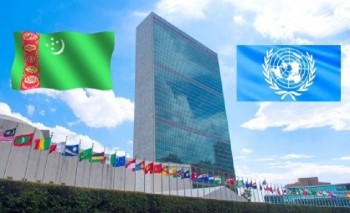
Turkmenistan will come up with initiatives in the field of energy at the UN General Assembly
At the 77th session of the United Nations General Assembly, which starts in New York in a few weeks, Turkmenistan will propose a number of initiatives, including in the energy sector. This is reported by the Ministry of Foreign Affairs of Turkmenistan.
Neon industry can bring large incomes to Turkmenistan, - expert
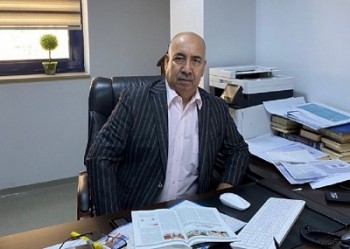
The well-known Turkmen scientist, expert and doctor of technical sciences Allaberdy Ilyasov considers the possibility of producing the chemical substance of neon in Turkmenistan very promising. This is reported by CentralAsia.news.