
Turkmenistan's achievements in reducing methane emissions were announced at the TESC 2025 conference
17:54 05.06.2025 10391
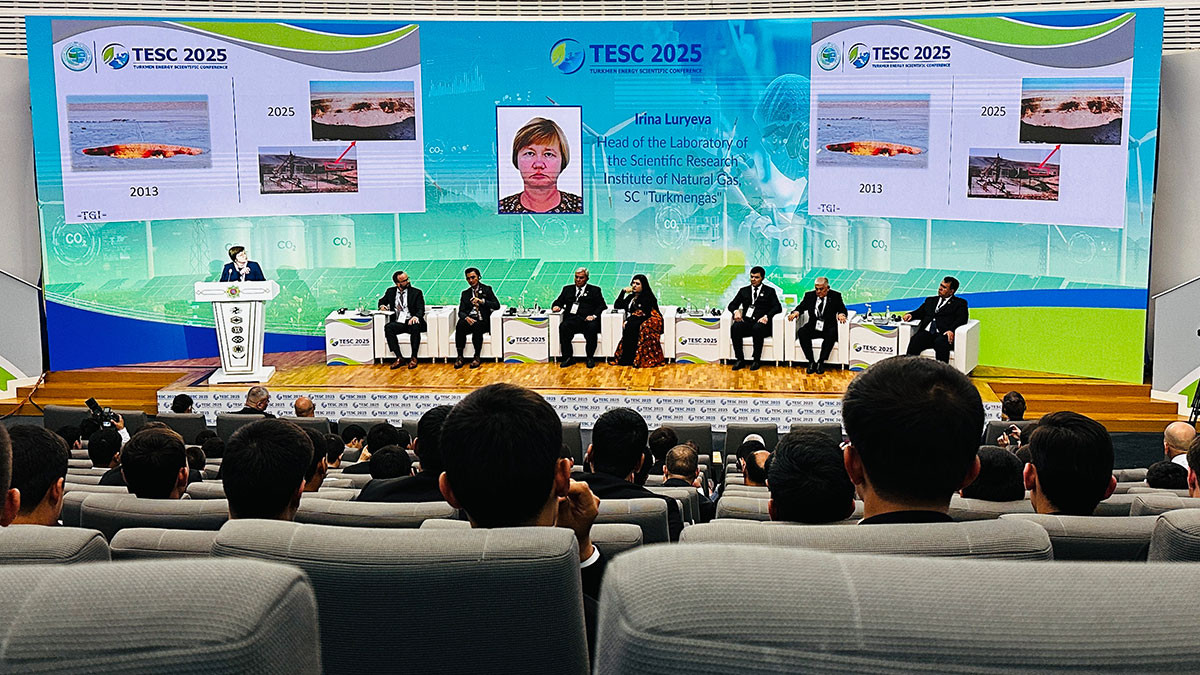
At the International Scientific and Practical Conference "Environmental Aspects of the Implementation of Innovative Technologies in the Development of Hydrocarbon Deposits" (TESC 2025), held in Ashgabat on June 5, innovative monitoring and impressive results in reducing methane emissions in Turkmenistan were presented.
Irina Luryeva, head of the laboratory of the Scientific Research Institute of Natural Gas of the State Concern "Turkmengas", spoke about the achievements of our country in this area in her speech.
Since joining the Global Commitment to Reduce Methane Emissions, Turkmenistan has been actively demonstrating its commitment to combating climate change. Our country has set an ambitious goal - to reduce methane emissions by at least 30% by 2030 compared to 2020 levels. This is confirmed by the approved Roadmap and consistent compliance with international environmental programs, such as the UN Framework Convention on Climate Change and the Paris Agreement.
To effectively control methane emissions, Turkmenistan launched a joint project with the United Nations Environment Programme (UNEP) in March 2024. As part of this cooperation, the MARS (Methane Alert and Response System) digital platform began systematically receiving data from satellites, which allows monitoring emission sources in real time.
The system has already proven its effectiveness. In November and December 2024, MARS did not record any cases of methane emissions at all gas production departments of the State Concern "Turkmengas", which indicates the success of preventive measures and ongoing monitoring.
One of the most striking examples of Turkmenistan's efforts was the significant reduction in emissions from the famous Darvaza gas crater. This crater, formed as a result of an accident during the drilling of an exploratory well, burned for decades, being a serious source of methane emissions. Initially, it was set on fire to prevent gas poisoning, but due to the multi-layer structure of the field, gas recharge continued.
The situation is now changing dramatically. Specialists from the industry's Natural Gas Research Institute have developed and are successfully implementing a Work Program at the Chaljulba field, of which the crater is a part. Previously mothballed wells were developed and put into operation. The receipt of low-pressure gas and slightly gasified formation water from different wells indicates a decrease in gas recharge to the crater.
New high-flow wells were drilled near the crater, which significantly increased gas extraction. Since December 2024, two such wells have already been in operation, and the monthly gas extraction rate has increased several times. Currently, the next stage of the program has begun, including the de-mothballing of other wells, and in February 2025, drilling of another new well with a high gas inflow was completed.
Thus, a tangible effect was achieved. If in 2013 the glow from the Darvaza gas crater was visible for many kilometers, now its burning can only be noticed in the immediate vicinity. These positive changes are confirmed by independent satellite data from Capterio. Their data, tracking the combustion and methane emissions from the Darvaza crater over many years, show a significant reduction in emissions. Over the analyzed period, the intensity of unorganized combustion of the crater decreased by more than 3 times.
As noted, the conducted study clearly demonstrates how the combination of various data sources contributes to making informed decisions and creates a universal model for reducing emissions even in the most difficult conditions.
Turkmenistan's commitment to environmental sustainability is manifested not only in large projects, but also in annual scientific conferences dedicated to innovative environmental solutions in the oil and gas industry. Although oil and natural gas are projected to play a key role in the global energy balance until 2050, Turkmenistan recognizes that the priority is not only production, but also the rational use of resources with a continuous reduction in harmful impact on the environment.
OPEC seminar in Vienna to discuss energy security, energy transition and financing
In Vienna, in the Hofburg Imperial Palace (Austria), on July 5-6, the 8th OPEC International Seminar "Towards a Sustainable and Inclusive Energy Transition" will take place.
President of Turkmenistan discussed implementation of major joint projects with new Pakistani Ambassador
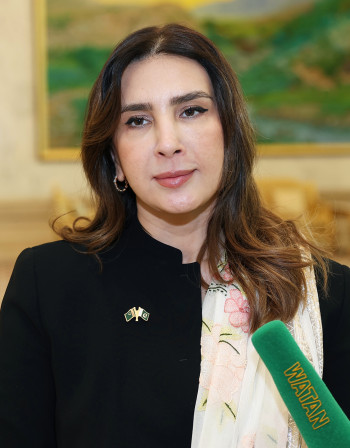
On June 30, President Serdar Berdimuhamedov received the new Pakistani Ambassador to Turkmenistan, Ms. Faryal Leghari, who presented her credentials to the head of state, TDH reports.
Fuel and energy products were sold for export and domestic markets at the GTSBT auctions
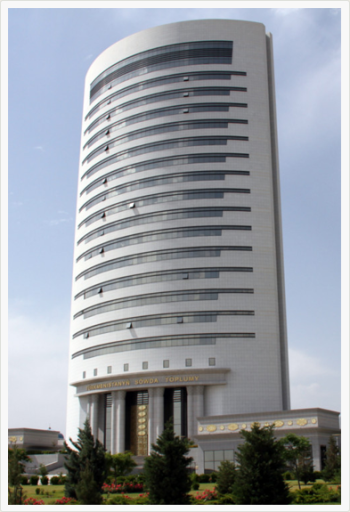
23 transactions were registered at the auctions of the State Commodity and Raw Materials Exchange of Turkmenistan last week.
Oil bitumen and polypropylene became the subject of transactions at the auction
16 transactions were registered at the auctions of the State Commodity and Raw Materials Exchange of Turkmenistan last week.
President of Uzbekistan congratulated Hero-Arkadag on his birthday
A telephone conversation took place between the National Leader of the Turkmen people, Chairman of the Halk Maslahaty of Turkmenistan Gurbanguly Berdimuhamedov and the President of Uzbekistan Shavkat Mirziyoyev on June 29, TDH reports.