Turkmenistan is ready to continue cooperation with partners on the implementation of the Trans-Caspian pipeline project, - MFA
14:04 25.07.2023 12051
Turkmenistan, being committed to the strategy of diversifying energy flows, expresses its readiness to continue cooperation with partners in the implementation of the Trans-Caspian pipeline project.” This is stated in the message for the media of the Ministry of Foreign Affairs of Turkmenistan, posted on the website of the Foreign Ministry of our country.
“Recently, a number of international media began to comment on the possibility of implementing a project for the supply of Turkmen natural gas in the western direction. We are talking about the construction of a gas pipeline along the bottom of the Caspian Sea in order to transport Turkmen “blue fuel” to European markets (the Trans-Caspian pipeline),” the Foreign Ministry said in a statement.
“Such a “sudden” manifestation of interest in a large-scale project in the current conditions, in general, is understandable and understandable. But, at the same time, it requires an objective and clear factual explanation,” the Foreign Ministry said in a statement.
“Turkmenistan is convinced that there are no political, economic, financial factors hindering the construction of the Trans-Caspian gas pipeline,” the Turkmen Foreign Ministry emphasizes.
“On the contrary, the Trans-Caspian pipeline is an absolutely realistic project, justified from an economic point of view, capable of making a tangible contribution to ensuring energy security in Eurasia, providing long-term and uninterrupted access to sources of raw materials for European consumers, while observing the obvious benefits and interests of the transit side,” writes the Foreign Ministry.
It is also noted that “the idea of building a Trans-Caspian gas pipeline, initiated by Turkmenistan, was initially considered by our country not just as an economically and commercially viable project, but also as an essential part of the diversification of energy flows as a key condition for global energy security and sustainability based on equal consideration of the interests and benefits of producers, consumers and transit countries, with which, by the way, all potential participants in the project agree.
The Ministry of Foreign Affairs recalls that “a substantive discussion of this issue began during the official visit of President of Turkmenistan Gurbanguly Berdimuhamedov to Brussels in November 2007, his negotiations with the President of the European Commission, European Commissioners and heads of various EU structures. In November of the same year and in May 2008, official EU representatives responsible for energy cooperation visited Turkmenistan, during which agreements in principle were reached on cooperation between Turkmenistan and the European Union in the field of energy”.
“One of the results of the meetings was also the signing in May 2008 of the Memorandum of Understanding and Cooperation in the field of energy between Turkmenistan and the European Union. Mutual readiness to develop a mechanism to ensure the supply of Turkmen energy resources to Europe was also confirmed during the official visit of the then President of the European Commission, Jose Manuel Baroso, to Turkmenistan in early 2011,” the Foreign Ministry said in a statement.
It is also noted that in parallel, within the framework of the UN, Turkmenistan initiated a broad dialogue on the problem of energy security, which resulted in the consensus adoption by the General Assembly in 2008 of the first resolution “Reliable and stable transit of energy carriers and its role in ensuring sustainable development and international cooperation.” 71 states became its cosponsors. In 2013, the UN General Assembly once again unanimously adopted the Turkmen draft of a similar resolution.
“Relying on a solid international legal framework, Turkmenistan made efforts to create the necessary political, financial, organizational conditions that would make it possible to translate the idea of building the Trans-Caspian pipeline into practice,” the Foreign Ministry said, noting that for this purpose trilateral partnership mechanisms were formed between Turkmenistan, Azerbaijan and the European Union, consisting of the heads of the relevant energy departments.
The Foreign Ministry also recalled that significant efforts were also made by the EU, in particular, in the form of the creation of the Caspian Development Corporation as an association of European energy companies, banks and other financial institutions to establish cooperation on the withdrawal of Caspian energy resources to the west. In addition, the European Union has included the Trans-Caspian gas pipeline in the list of promising projects.
“In general, cooperation on the construction of the Trans-Caspian pipeline has been moving forward consistently and practically, receiving political and functional international support,” the Foreign Ministry notes.
“The international legal validity of the project is also beyond doubt after the adoption in 2018 by five coastal states of the fundamental document regulating the key principles of policy in the Caspian – the Convention on the Legal Status of the Caspian Sea,” the Foreign Ministry is convinced.
“Article 14 of this document, in particular, states that “the parties may lay cables and pipelines along the bottom of the Caspian Sea. Determination of the route for laying submarine cables and pipelines is carried out in agreement with the party through the sector of the bottom of which the submarine cable or pipeline is to be laid.
Thus, today the construction of the Trans-Caspian pipeline is directly related to the delimitation of the bottom between Turkmenistan and the Republic of Azerbaijan, the Foreign Ministry notes.
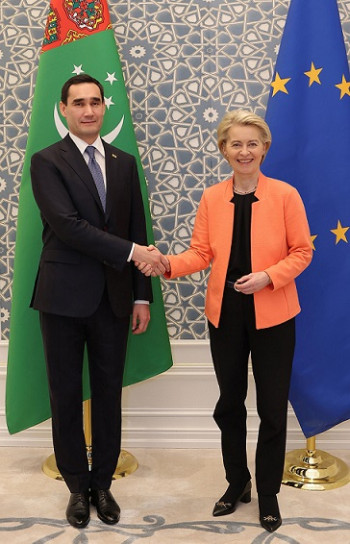
The President of Turkmenistan and the President of the European Commission expressed confidence in the successful holding of the Central Asia-EU Summit
The President of Turkmenistan Serdar Berdimuhamedov, who is on a working visit to Uzbekistan to participate in the first Central Asia-European Union Summit, met with the President of the European Commission Ursula von der Leyen on April 3.
The price of Brent rose above $100 per barrel again
Oil prices are rising moderately on Friday morning after falling the day before, foreign media reported.
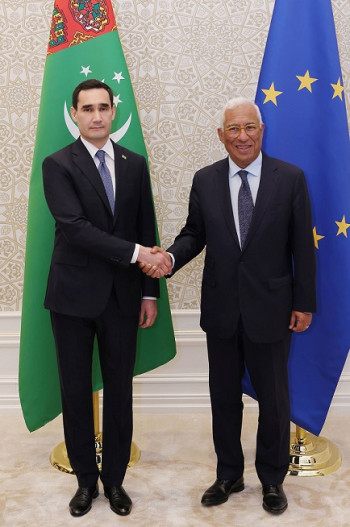
The President of Turkmenistan discussed the prospects for regional cooperation with the President of the European Council
The President of Turkmenistan Serdar Berdimuhamedov, who is on a working visit to Uzbekistan to participate in the first Central Asia-European Union Summit, met with the President of the European Council António Costa on April 3, TDH reports.
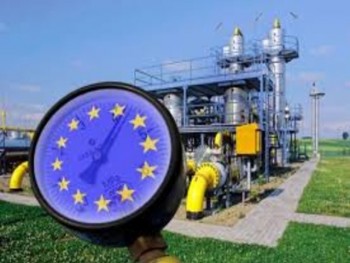
Gas price in Europe exceeded $3,300 per 1,000 cubic meters
The spot price of gas in Europe on Thursday evening continued its active growth. A jump in prices at the end of the European trading session is usually the result of the influence of the growth of quotations in the Asian market, Interfax reports.
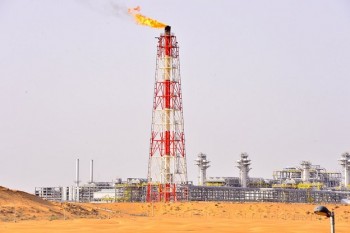
It is planned to increase hydrocarbon production in Balkan region
In the Balkan region, a key region in the oil and gas sector of Turkmenistan, it is planned to increase natural gas production to 11 billion cubic meters per year by 2025. The head of the Department for Analysis of Economic Risks of the Agency for Protection from Economic Risks under the Ministry of Finance and Economy of Turkmenistan, Hangeldi Gurbangeldiev, said this in a commentary for the official Turkmen press.