
The mysterious gas crater has its own real story
17:10 01.02.2022 18815
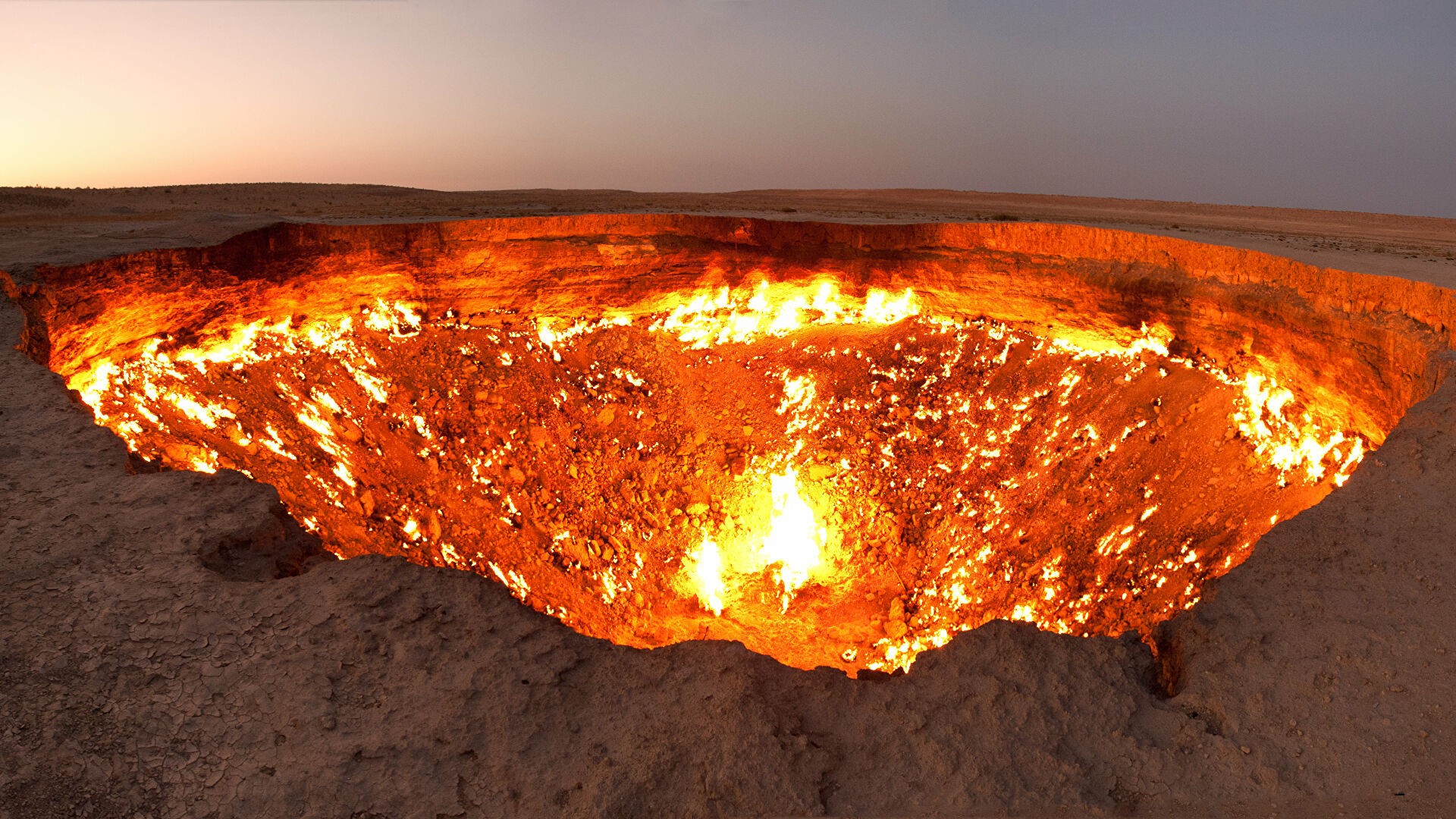
The President of Turkmenistan, speaking on January 7 at the first meeting of the Government this year, ordered to find a solution to extinguish the gas crater that has been burning for more than 50 years in the very center of the Karakum desert.
Attention to this problem is connected with concern for the ecology of the area, the health of the people living here, the rational use of the natural resources of our country. As the head of state noted, “a huge amount of gas has been burned in this area for many years. This circumstance negatively affects the environment and the health of people living nearby. Natural gas is also consumed, from which significant profits can be made to ensure the well-being of the people”.
In recent years, a burning gas crater, located about 260 kilometers north of Ashgabat, in the town of Darvaza, has become a well-known landmark of our country. An unusual phenomenon attracts the attention of scientists and numerous tourists interested in all sorts of natural mysteries.
Among the people, this mysterious area received the figurative name «Gates of Hell» and acquired various legends.
But this seemingly mysterious phenomenon has its own very real story.
According to reports, it began in 1971, when geologists working here discovered an underground cavity in the desert with an accumulation of natural gas. During the development of the field, a collapse occurred. The drilling rig went underground, and gas began to flow from the resulting underground cave. The diameter of the gas hole is 60 meters, the depth is about 20 meters.
To avoid poisoning people and livestock with gas, geologists decided to set it on fire, believing that the fire would die down over time. But natural gases escaping from the ground continue to burn to this day and are even visible from space. The intense heat and danger of collapse of the rims of the crater makes it difficult to penetrate the funnel and study it from the inside.
In November 2013, traveler and explorer George Kourounis from Canada descended to the bottom of a burning crater to conduct research and collect soil samples.
According to Kourounis, it took him a year and a half to prepare the expedition. Before leaving, I had to practice over the gorge of the local river: it was necessary to try out the descent along the outstretched rope, when he was dressed in a heat-proof suit, had a breathing apparatus and special climbing equipment, which had to be made to order from a material that did not melt from the heat. In addition, as a training, the daredevil hired a special stuntman who set fire to him so that he would not panic in a similar situation.
The researcher compared his feelings during the descent into the crater with being on another planet. And the fact that he constantly had to monitor the breathing apparatus, the condition of the ropes, video filming, did not leave him time to be scared.
“I would call it the Colosseum of Fire: wherever you look, there are thousands of small torches everywhere. And the sound is like the roar of a jet engine, such a powerful, oppressive sound of burning gas. And no smoke,” Kourounis told later.
The risk was justified: it was possible to find bacteria resistant to high temperatures. It was also surprising that these bacteria are not found anywhere on the surface of the earth and feel great living in a small ecosystem at the bottom of a hot crater. The discovery of such life forms is very important from the point of view of astrobiology, because on many planets outside the solar system conditions resemble the Turkmen crater.
The fact that the information about the instruction given by the Turkmen leader Gurbanguly Berdimuhamedov to close it and use it for the benefit of the people attracted the attention of numerous foreign media outlets that placed it on their news feeds testifies to how interesting the Darvaza gas crater is for the general public.
Turkmenistan and Kazakhstan intend to strengthen cooperation in the gas industry
The State Concern «Turkmengas» and the Ministry of Energy of Kazakhstan signed a Memorandum of Intent to Strengthen Cooperation in the Gas Industry.
Prospects for cooperation in the fuel and energy sector were discussed with BOTAŞ
On December 6, a meeting was held in Ashgabat between the management of the Turkmengas State Concern and a delegation from Turkey headed by Abdulvahit Fidan, Director General of BOTAŞ. The Turkmen side was led by Maksat Babayev, State Minister of Turkmenistan and Chairman of the Turkmengas State Concern.
Hero-Arkadag: There are great prospects for wide-format cooperation with Afghanistan
with the commissioning of facilities and laying new ones between Turkmenistan and Afghanistan, great prospects for wide-format cooperation open up. This was announced on September 11 at the ceremony of commissioning and starting of the construction of a number of infrastructure facilities with the participation of Afghanistan.

Serdar Berdimuhamedov: the interests of Turkmenistan and the SCO coincide in terms of strategic parameters
The interests of Turkmenistan and the SCO coincide in strategic parameters, said Vice-Chairman of the Cabinet of Ministers of Turkmenistan Serdar Berdimuhamedov, speaking on Thursday on the digital system at the 20th meeting of the Council of Heads of Government of the Shanghai Cooperation Organization member states.
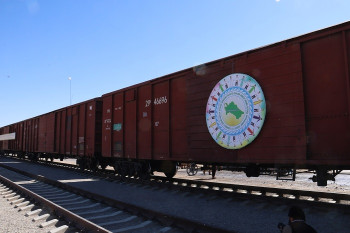
Turkmenistan sent another humanitarian aid to Afghanistan
On Wednesday, September 11, as part of the start of construction of the Serhetabat-Herat gas pipeline and other infrastructure facilities on the Turkmen-Afghan border, humanitarian aid was sent at the expense of the Gurbanguly Berdimuhamedov Charitable Foundation for Assistance to Children in Need of Care.