
Ecological culture is the path to a green life
11:56 14.10.2025 3099
For centuries, people have lived in harmony with the environment and enjoyed its benefits. Inspired by nature, scientists have made great discoveries and invented new things that make life and everyday life easier. In recent centuries, with increasing consumption, natural resources have been depleted, and the environment has suffered serious damage, leading to a disconnect between humans and nature. Therefore, principles such as respect for nature, concern for the well-being of the environment and the rational use of natural resources are currently gaining increasing importance worldwide. Disseminating these principles among the population, raising awareness and implementing actions for environmental well-being in everyday life are the primary goals of a green or ecological culture. Ecological culture is an organic and integral part of culture, encompassing aspects of human consciousness and activity related to the environment. In other words, people’s attitude toward nature and their actions related to the environment in everyday life define their ecological culture.
Today, ecological culture is considered an integral part of achieving sustainable development. Currently, manufacturers and service providers are paying considerable attention to implementing green economy principles. The government also supports their initiatives in this area. Public organizations, in turn, are holding various events and developing projects to reduce the harmful human impact on the environment and to improve environmental awareness. Clearly, all this work is important. However, environmental well-being also depends on changing the habits of each individual in their daily lives.
Environmental awareness presupposes raising people’s awareness of the well-being of nature and taking concrete actions to develop habits aimed at reducing environmental harm. To achieve this, as global experience shows, it is necessary to take relevant aspects of economic relations to a new level, beginning with children’s environmental awareness. In terms of global practice, we can turn to the experience of the Scandinavian countries: Finland, Sweden and Norway. According to statistics, each resident of Finland produces approximately 493 kilograms of waste per annum. Nationally, this figure is 2.8 million tons. 42% of this waste is recycled. In Sweden and Norway, the amount of waste per capita is approximately the same as in their neighboring country. However, in Sweden, 34.6% of waste is recycled, while in Norway, the figure is 38%. These are very high indices achieved through years of public awareness campaigns. This has influenced the local population’s habit of sorting waste into appropriate categories. To foster this responsibility, kindergartens in these countries are introducing ecology classes and play-based lessons that instill in children a love of nature and care for the environment. Adults, who violate the rules for disposing of waste in designated containers, are subject to hefty fines.
In Europe, countries such as Germany, Austria, Slovenia and Belgium are leaders in waste recycling. In these countries, approximately 54-66 percent of waste is recycled and used for economic purposes. In Germany, great importance is placed on developing children’s attitudes toward environmental issues through personal experience. In all federal lands of the country, the continuity of environmental education and upbringing is enshrined in law and applies to people of all ages. In Germany, environmental education and culture have been included in the curriculum of all schools since the 1980s. Students’ knowledge and education about the environment and nature are based on experiences gained in the relevant fields. With the help of educators and teachers, they study natural phenomena and the urban environment. Before sending waste for recycling, special attention is paid to the rules for its proper collection and sorting by type. In this regard, close cooperation has been established with local government bodies, including political and public organizations.
Japan is a country distinguished by its well-developed environmental culture. Its population annually produces approximately 44 million tons of household waste. While such waste was a major problem several decades ago, today the Japanese have learned to recycle virtually all types of waste. As a result, approximately 80 percent of all household waste in the country is recycled. Surprisingly, schools do not offer specialized classes on this topic. Improving environmental awareness is the goal of free courses for adults organized by municipal services in the country’s cities, which tailor classes to the needs of their respective regions. Among Asian countries, the United Arab Emirates stands out for its unique experience in promoting environmental awareness. Special government initiatives and programs for environmental education have been implemented for over 20 years. Although initial efforts in this direction were unsuccessful, the Sustainable Schools Initiative was launched in 2009. As part of this initiative, schools establish partnerships with government agencies, the private sector, NGOs and international organizations specializing in water, electricity, waste management and transportation. It is worth noting that over the first 10 years, this initiative helped reduce school water consumption by an average of 41.6% and electricity consumption – by 17%. In the Emirates, schools have launched initiatives such as coastal clean-ups, planting native plants, covering green areas with artificial turf to conserve water, making trash bins from recycled materials, installing energy-saving light bulbs in all lighting fixtures and requiring students in high school to complete all their work on tablets and computers to avoid paper.
Another way to contribute to environmental well-being by strengthening environmental awareness is implementing measures to reduce household water and energy consumption. Energy conservation and the promotion of renewable energy are outlined in the United Nations’ Sustainable Development Goal 7 (Ensure access to affordable, reliable, sustainable and modern energy for all). Along with government programs implemented in this area, each person can make a significant contribution through their daily activity. According to statistics, approximately 25% of the energy, consumed globally, is consumed by households.
In terms of caring for the environment and the well-being of nature in households, measures such as installing energy-efficient lighting systems, turning off unused appliances and unplugging them, properly using heating and cooling systems, using energy-efficient appliances, and using water wisely can be helpful. These simple steps will help protect natural resources, reduce carbon emissions and lower utility costs.
In our country, great attention is paid to ensuring environmental well-being and preserving natural resources for future generations. This truth is vividly confirmed by the environmental policy being implemented in the country, which was initiated by the Hero-Arkadag and is successfully being continued by Head of State Serdar Berdimuhamedov. To enhance the environmental knowledge and culture of the younger generation, relevant subjects and disciplines are included in the curricula of educational institutions at all levels. A love of nature, which is the source of environmental education, has always been of great importance to our people. Key aspects of modern environmental science are also reflected in folk wisdom. The Hero-Arkadag, in his remarkable work The Spiritual World of the Turkmen, writes that “the sources enriching modern environmental science are also hidden in folk wisdom. Stories and legends about flora and fauna are the pearls of our ancestors’ life experiences. Therefore, our national education system places special emphasis on a love of nature and a caring attitude toward land and water.”
Environmental well-being is a priority for the state policy in our country. Events such as the mass planting of saplings held twice a year, in spring and autumn, and mass bike rides, organized on specific dates, also play a significant role in continuing the noble traditions of our ancestors, drawing attention to this important issue and raising public awareness. Significant importance is also placed on strengthening international cooperation in this area and implementing global best practices. Currently, social and industrial facilities are being built in the country’s regions, the capital and the city of Arkadag in accordance with international environmental standards with the availability of energy-saving systems. Turkmen entrepreneurs are also striving to develop green trends in manufacturing and services. All of this is a striking example of how the noble traditions of our ancestors, who lived in harmony with nature, can combine with the pressing needs of the modern world, with a strong focus on the well-being of current and future generations.
Muhammetnur YAZGELDIYEV,
a student of the Turkmen State Institute of Culture
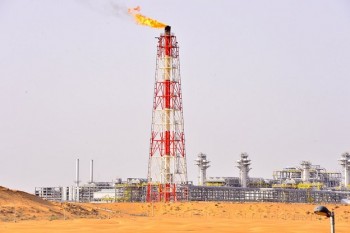
It is planned to increase hydrocarbon production in Balkan region
In the Balkan region, a key region in the oil and gas sector of Turkmenistan, it is planned to increase natural gas production to 11 billion cubic meters per year by 2025. The head of the Department for Analysis of Economic Risks of the Agency for Protection from Economic Risks under the Ministry of Finance and Economy of Turkmenistan, Hangeldi Gurbangeldiev, said this in a commentary for the official Turkmen press.
Gas price in Europe exceeded $3,300 per 1,000 cubic meters
The spot price of gas in Europe on Thursday evening continued its active growth. A jump in prices at the end of the European trading session is usually the result of the influence of the growth of quotations in the Asian market, Interfax reports.

The price of Brent rose above $100 per barrel again
Oil prices are rising moderately on Friday morning after falling the day before, foreign media reported.
The President of Turkmenistan dismissed the Deputy Chairman of the State Concern «Turkmennebit»
By the Decree of the President of Turkmenistan, Mammedov Toygeldi Bayrammyradovich was dismissed from the post of Deputy Chairman of the State Concern «Turkmennebit» as he failed to cope with the duties assigned to him.
Transactions for the export of LNG and jet fuel were entered at exchange trading
On Monday, August 22, 12 transactions were concluded at the State Commodity and Raw Materials Exchange of Turkmenistan for a total of $5.4 million, the ORIENT news agency reported.