
Green economy is an important direction of sustainable development
16:29 05.09.2025 3202
The strategic goal of the state policy in the field of environment protection is to ensure environmentally safe living conditions and activity of society and citizens, based on the widespread implementation of the principles of the green economy and the maximal preservation of natural systems. The most important tasks for achieving this goal are to ensure a sustainable reduction in the harmful impact on the environment and to increase the efficiency of using the natural resource potential to meet the current and future needs of society.
Priority areas are the implementation of the smart city conception, the development of a waste-free economy, based on a radical reform of the waste management system, and measures to expand the use of renewable energy sources and to reduce the economy’s needs for natural resources.
The strategic goals in the field of ensuring an environmentally safe living environment are the preservation of local and regional ecosystems for current and future generations and the protection of the population from the negative impact of natural and manmade emergencies.
The mitigation of the effects of climate change and adaptation to it, the reduction of the negative socioeconomic consequences of natural disasters and hazardous weather events, the restoration of ecologically unstable ecosystems to their previous state and the restoration of their natural quality are among priority tasks. For efficient use of land resources, it is necessary to implement measures aimed at greening land use and adapting it to climate change and improving the territorial organization of cultivated lands, administrative boundaries and territorial units, the land assessment and the taxation system. The strategic goal of protecting the country’s water resources is to increase the efficiency of the use and protection of water resources and to improve their quality in accordance with the needs of society and climate change. The main focus in water resources management will be on achieving long-term water security, which involves taking measures to reliably provide the population with drinking water of normal quality and to ensure the safe discharge of wastewater into the environment.
For the purpose of sustainable development of the mineral resource base, the re-equipment and digitalization of geological exploration, the introduction of environmentally friendly innovative technologies for the extraction, processing and maximally efficient use of minerals and the minimization of the negative impact of mineral extraction will strengthen the national system of the green economy.
The strategic goal of the state policy in the field of waste management is to involve waste in economic circulation as secondary raw materials and to prevent their negative impact on the environment and public health. To achieve these goals, it is necessary to prevent their formation, based on the provisions of the Zero Waste conception, which provides for the processing of everything obtained from nature, turning it into useful products and returning it to production.
It is important to reduce the accumulation of large volumes of production waste and the formation of hazardous production waste, to increase the level of their utilization and to ensure their environmentally safe disposal, and in this direction, through the efforts of the Esteemed President, programmatic work is being carried out.
When building a national green economy, a long-term strategy for the transition to a fundamentally new model of resource efficiency, a zero-waste economy, is being implemented. This model is aimed at saving and reducing the consumption of all types of raw materials and fuel and energy resources, based on the harmless circulation of material resources, the optimization of production processes and the introduction of technological and social innovations into production.
Altyn DURDIYEVA,
a Chief Specialist of the Department of Economic Analysis and Forecasting of the Directorate of Economic Analysis and Finance of the Daýhanbank State Commercial Bank of Turkmenistan
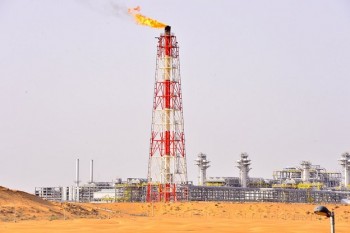
It is planned to increase hydrocarbon production in Balkan region
In the Balkan region, a key region in the oil and gas sector of Turkmenistan, it is planned to increase natural gas production to 11 billion cubic meters per year by 2025. The head of the Department for Analysis of Economic Risks of the Agency for Protection from Economic Risks under the Ministry of Finance and Economy of Turkmenistan, Hangeldi Gurbangeldiev, said this in a commentary for the official Turkmen press.
Gas price in Europe exceeded $3,300 per 1,000 cubic meters
The spot price of gas in Europe on Thursday evening continued its active growth. A jump in prices at the end of the European trading session is usually the result of the influence of the growth of quotations in the Asian market, Interfax reports.
The price of Brent rose above $100 per barrel again
Oil prices are rising moderately on Friday morning after falling the day before, foreign media reported.
The President of Turkmenistan dismissed the Deputy Chairman of the State Concern «Turkmennebit»
By the Decree of the President of Turkmenistan, Mammedov Toygeldi Bayrammyradovich was dismissed from the post of Deputy Chairman of the State Concern «Turkmennebit» as he failed to cope with the duties assigned to him.
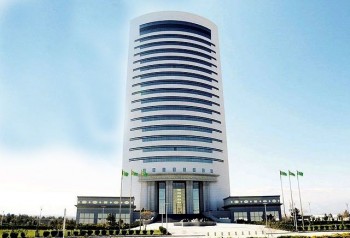
Transactions for the export of LNG and jet fuel were entered at exchange trading
On Monday, August 22, 12 transactions were concluded at the State Commodity and Raw Materials Exchange of Turkmenistan for a total of $5.4 million, the ORIENT news agency reported.